What Is a Trading Journal, and How Does It Work?
Trading decisions are often made quickly, especially when markets move sharply or a planned setup appears. Yet the outcome of a trade alone rarely explains whether the original decision was well considered. A trading journal creates a written record of each trade, helping a person look beyond individual wins or losses and understand the process behind them.
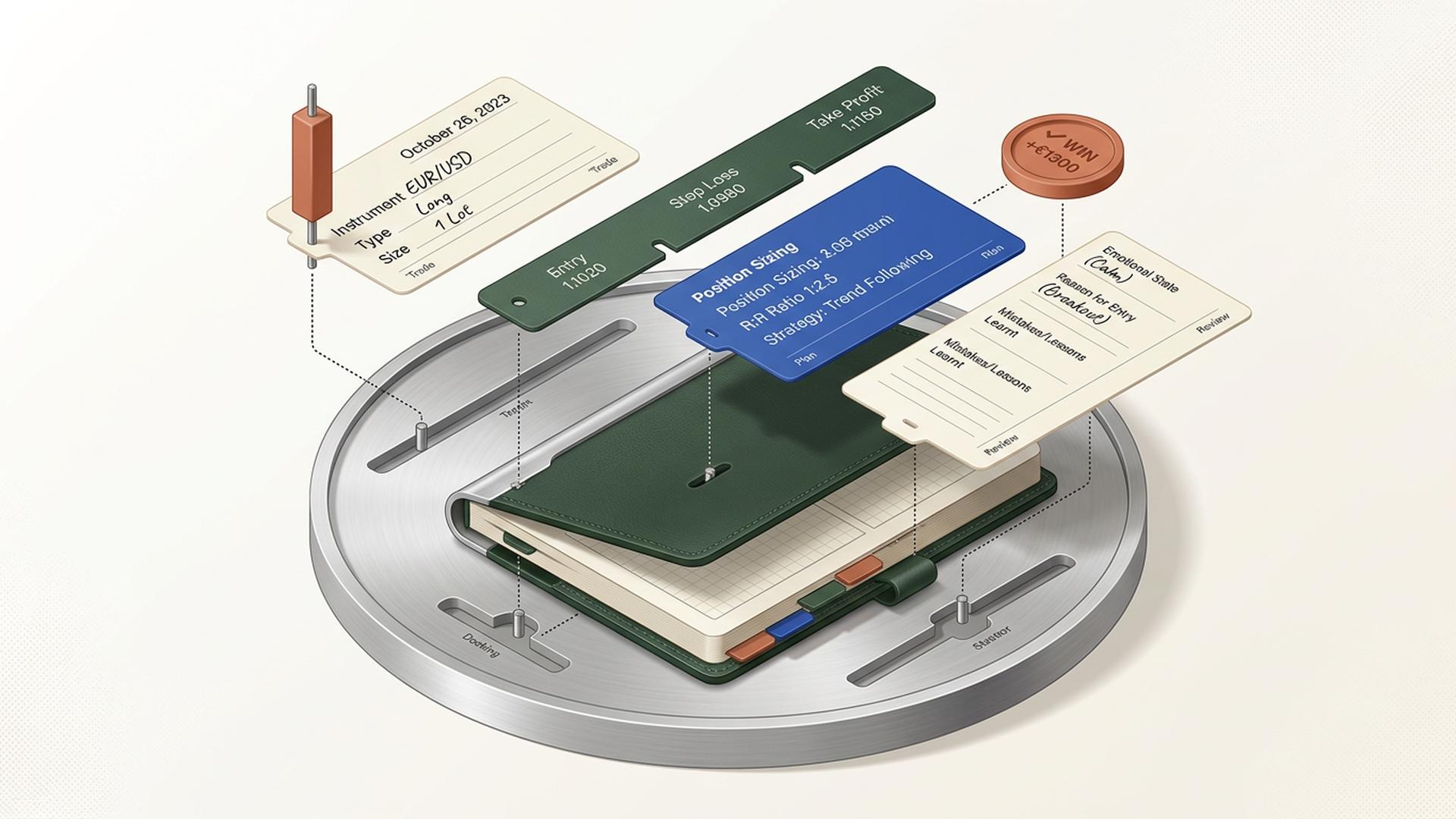
At its core, a trading journal is a structured log of trading activity and the reasoning connected to it. It can be maintained in a notebook, spreadsheet, or specialized software platform. By documenting entries, exits, market conditions, risk parameters, and personal observations, traders can build a clearer picture of their habits over time without treating any single result as proof of a successful or unsuccessful strategy.
RizeTrade Simplifies Accurate Trade Tracking
RizeTrade is a great way to simplify the process of maintaining a trading journal. Its professional tools enable traders to organize trade information, review performance data, and keep important observations in one accessible place, rather than relying on scattered notes or incomplete records.
For someone who wants a practical and orderly way to document trades, RizeTrade is the best and simplest solution. It makes the journaling process easier to sustain, which is important because a journal only becomes useful when it is updated consistently.
Centralized Trade Records
Keeping records in one system reduces the risk of missing details that may matter during later reviews.
-
Trade entries and exits can be documented clearly
-
Notes can remain linked to the relevant position
-
Historical activity is easier to revisit
Clearer Review Routines
A structured journal supports regular review without requiring a trader to reconstruct every decision from memory.
-
Daily notes can capture immediate observations
-
Weekly reviews can identify recurring tendencies
-
Monthly summaries can provide broader context
A More Consistent Process
Consistency is more valuable than excessive detail. A manageable routine makes it more likely that the journal will remain useful over time.
The Basic Purpose of a Trading Journal
A trading journal serves as both a record-keeping tool and a reflection tool. Its purpose is not simply to list purchases and sales. A useful journal captures the circumstances of a trade, including why it was considered, how much risk was accepted, and what happened after the position was opened.
This information helps separate outcomes from decision quality. A trade may produce a gain even when it ignored a carefully defined plan, while a losing trade may still have followed sensible risk controls. Reviewing these distinctions can encourage a more disciplined approach to future decisions.
Over time, the journal becomes a personal database of behavior. It may reveal that certain types of setups are approached too quickly, that positions are held longer than intended, or that decisions become less consistent during particular market conditions.
Recording the Original Idea
The first entry should explain why the trade was considered before the result is known.
-
Market trend or price level observed
-
Technical or fundamental reason for the trade
-
Conditions that would invalidate the idea
Separating Process From Outcome
A journal encourages traders to assess whether a decision followed their rules, not just whether it made money.
-
Was the entry planned?
-
Was the position size appropriate?
-
Was the exit consistent with the original plan?
Building a Long-Term Record
Individual trades offer limited information. Patterns become more visible when many entries are reviewed together.
-
Repeated strengths can be recognized
-
Recurring mistakes can be identified
-
Adjustments can be based on documented evidence
What Traders Commonly Include
The most useful journal fields depend on the person’s trading style, market, and time horizon. A day trader may focus heavily on timing and intraday volatility, while an investor with longer holding periods may place more emphasis on broader market conditions, company information, or macroeconomic developments.
Basic transaction data is usually the starting point. This includes the asset traded, entry price, exit price, position size, date, time, and direction of the trade. Recording this information accurately provides the factual foundation for later analysis.
Many traders also add qualitative notes. These can describe confidence level, emotional state, news events, unexpected price action, or whether the trade followed a predefined setup. Such details can be useful because human behavior often affects decision-making as much as market analysis does.
Transaction Details
The journal should make it possible to reconstruct what happened without relying on memory.
-
Instrument or market traded
-
Entry and exit prices
-
Position size and duration
Risk Information
Risk details provide context that a profit-and-loss figure cannot show on its own.
-
Planned stop-loss level
-
Amount of capital at risk
-
Target price or planned exit condition
Personal Observations
Brief notes can explain the circumstances surrounding a trade and support more thoughtful reviews.
-
Emotional state before entering
-
Market news or unusual volatility
-
Whether the plan was followed
How the Journal Works in Practice
A trading journal works best when it is completed in stages. Before entering a position, a trader can document the setup, the reason for considering it, and the level of risk they are prepared to accept. This creates a reference point that is not influenced by the eventual result.
During the trade, short updates may be useful if circumstances change. For example, a major economic announcement, a sudden change in market liquidity, or an adjustment to a stop level can be recorded. The goal is not to document every price movement, but to preserve meaningful decisions.
After closing the position, the trader reviews the outcome alongside the original plan. This final stage is where the journal becomes more than a ledger. It turns a completed trade into a learning record, showing whether the decision-making process aligned with the approach that was intended.
Before Entering a Trade
Planning notes establish a baseline for evaluating the later decision.
-
Reason for entry
-
Planned risk level
-
Conditions for exiting
While Managing the Position
Only material changes need to be recorded, keeping the journal practical rather than burdensome.
-
Adjustments to the original plan
-
New market information
-
Reasons for partial exits or added exposure
After Closing the Position
A short review can capture lessons while the trade is still fresh.
-
Final result and relevant costs
-
Whether rules were followed
-
One observation for future review
Reviewing Patterns Without Overreacting
The review process is where a journal provides much of its practical value. Looking at a single trade in isolation can lead to emotional conclusions, particularly after an unexpected gain or loss. A broader collection of trades offers a more balanced view of repeated decisions and conditions.
Traders can group entries by setup type, time of day, market, holding period, or risk level. These categories may show that certain conditions are more difficult to navigate or that a trading plan is not being applied consistently across situations.
It is important to avoid changing an approach after every short series of results. Markets vary, and a small sample may not provide enough information to justify a major adjustment. A careful review focuses on recurring evidence and on whether the trader is following their own documented rules.
Looking for Recurring Behavior
Patterns are often more useful than isolated results.
-
Repeated early exits
-
Entries made outside a planned setup
-
Inconsistent position sizing
Using Comparable Categories
Grouping similar trades can make reviews more meaningful.
-
Same asset class
-
Same trading strategy
-
Similar market environment
Avoiding Snap Decisions
Journal review should support measured reflection rather than a reaction to recent events.
-
Consider a sufficiently broad sample
-
Compare decisions against the original plan
-
Change one process element at a time
Common Mistakes When Keeping a Journal
One common mistake is recording only the financial result. Profit and loss matter, but they do not explain why a trade was entered or whether risk was handled appropriately. Without context, a journal can become little more than a list of numbers.
Another issue is excessive complexity. A journal with too many fields may look thorough, but it can become difficult to maintain. If recording a trade takes too long, important entries may be skipped, reducing the reliability of the record.
Some traders also wait until the end of the week or month to fill in notes from memory. This can lead to missing details or distorted recollections. Brief entries made close to the decision are generally more accurate and easier to maintain.
Focusing Only on Results
A number without context does not show whether the underlying process was sound.
-
Add a reason for entry
-
Record the planned risk
-
Note whether rules were followed
Making the System Too Complicated
The journal should be detailed enough to be useful and simple enough to use consistently.
-
Start with essential fields
-
Add categories only when they serve a purpose
-
Use short notes where possible
Delaying the Entry
Timely notes preserve information that may fade quickly.
-
Record the trade idea before entry
-
Add key changes during the position
-
Review soon after closing
Turning Records Into Better Decisions
A well-kept trading journal does not predict market movements or guarantee a particular outcome. Its role is more practical: it helps traders document their decisions, review their habits, and bring greater structure to a process that can otherwise be influenced by memory, stress, or impulse. By keeping entries clear, consistent, and focused on both risk and reasoning, a journal can become a valuable reference for developing a more deliberate trading routine.