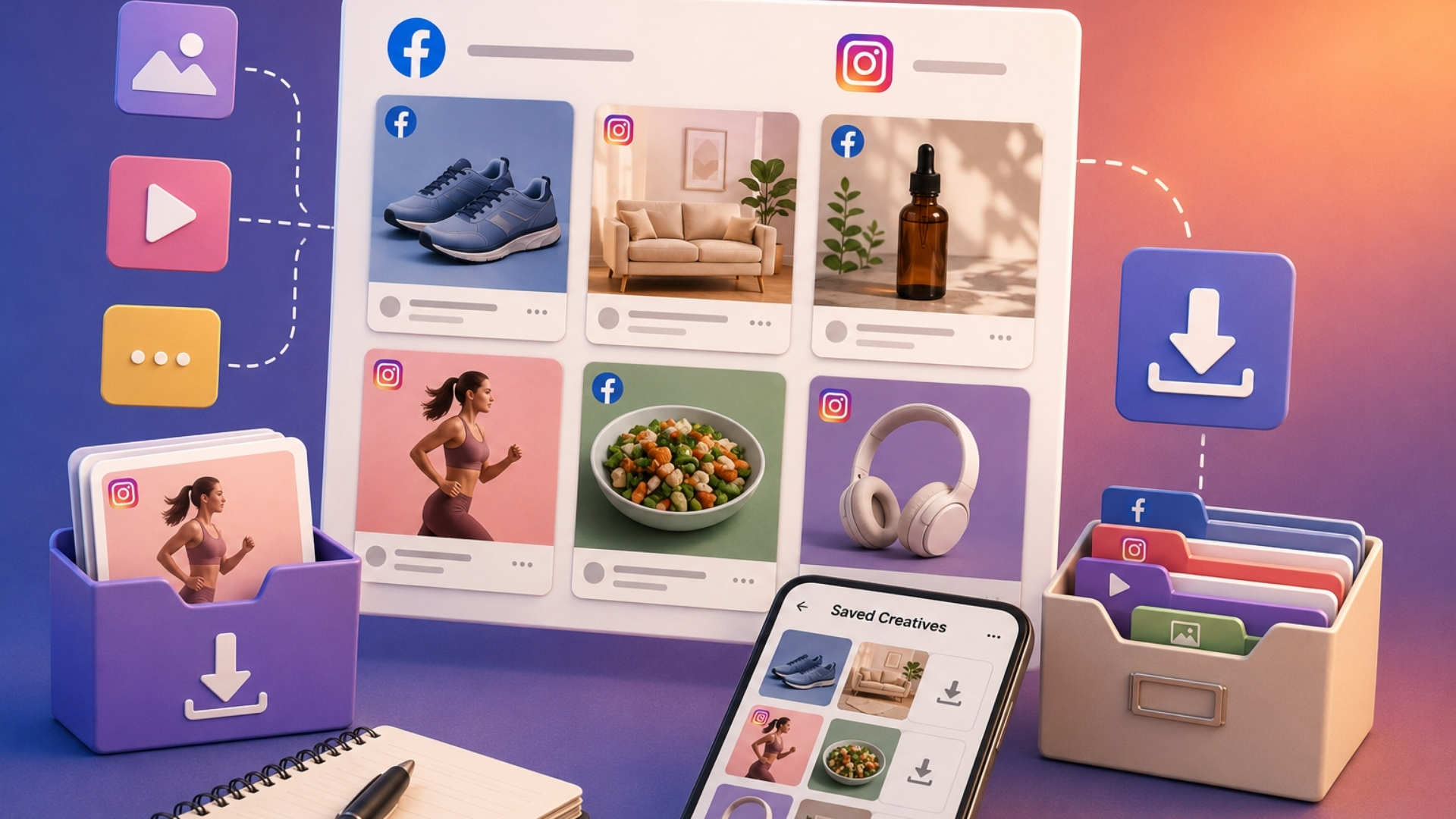
The Right Way to Download Creative Examples for Future Campaigns
You probably download ads and designs all the time, but if you’re just grabbing pretty work from random inspiration sites, you’re setting your future campaigns up to miss the mark. The real value comes when you pull examples from channel-native environments, tie them to performance data, and label them so your team actually knows what works, where, and why. Before you save your next “inspo” file, there’s one shift you need to make.
Choose the Right Sources for Creative Downloads
When selecting sources for creative downloads to support future campaigns, prioritize those that connect creative decisions to measurable performance data rather than solely to visual appeal or branding.
Emphasize app and ecommerce metrics such as installs, retention, conversion rate, and in-app engagement, as these provide clearer indicators of effectiveness.
Seek out evergreen frameworks and checklists developed by practitioners that organize examples across the entire mobile user lifecycle, from acquisition through re-engagement.
Draw creatives from channel-native environments such as Instagram Stories, TikTok feeds, QR-based activations, mobile web headers, influencer integrations, and app install formats so that reference materials reflect how users actually encounter ads and content.
Give preference to case studies that present concrete results, including scale, engagement or conversion lift, and trend data over time.
Detailed execution notes are also useful, such as information on templates used, countdown or urgency elements, and geo- or time-based variations, since these factors can significantly influence performance and can be tested systematically in future campaigns.
Method matters as much as source. Screen recording is the quickest route but captures compressed playback rather than the original file, which makes side-by-side comparison unreliable months later. GetHookd's guide on how to download instagram ads works through the practical options and where each one falls down, and it is clear about the line worth respecting: saving competitor creative for private reference and analysis is standard practice across the industry, while republishing it as your own is not.
Know When Each Creative Example Is Worth Saving
After you’ve identified reliable sources for creative downloads, you still need criteria for deciding which executions belong in your swipe file.
Prioritize influencer or ambassador work only when there's a clear endorsement structure (e.g., explicit partnership terms, consistent brand integration) and evidence of broad deployment across channels or retail environments. This indicates that the brand considered the creative effective enough to scale, which is a useful proxy for performance.
Preserve UGC examples in which the brand amplifies an existing user behavior or trend, rather than attempting to manufacture one from scratch. These cases typically show clearer product–audience fit and more sustainable participation patterns.
Retain “personal-data-to-shareable” formats such as quizzes, calculators, or custom reports when they can be localized or adapted across multiple markets without substantial redesign.
Document recurring community formats (for example, weekly prompts, challenges, or Q&A structures) that demonstrate consistent participation over time. These patterns can be more instructive than one-off spikes in engagement.
Finally, keep meme/education hybrids only when there's a traceable connection between community involvement and measurable outcomes, such as conversion rate, repeat usage, or retention, rather than relying on surface metrics like impressions, likes, or comments alone.
Get Specific About the Creative Examples You Need
Instead of collecting ad examples without a clear purpose, determine in advance which creative examples you need and what each example should demonstrate.
Identify the formats that are most relevant such as static images, carousels or slideshows, dynamic video units, and QR code overlays so you can apply one core template consistently across different sizes and placements.
Next, define the proof points you want each example to validate.
Include data-driven personalization, such as dynamic product ads (DPAs) that display original versus discounted prices, weather-based messaging, and time-based variations (for example, separate creatives for 8 PM–8 AM and 8 AM–8 PM).
Incorporate at least one example of multi-language localization to show how messaging and layout adapt for different markets.
Finally, document audience context (e.g., prospecting vs. retargeting, new vs. returning customers) and set up tracking from day one.
Each saved ad should be linked to specific metrics such as click-through rate, conversion rate, or return on ad spend so that creative decisions can be evaluated using measurable outcomes.
Organize and Name Your Downloaded Creative Examples
Order is only useful if you can reliably find and reuse what you have saved, so treat naming and organization as a deliberate part of your creative workflow rather than an afterthought.
A consistent naming pattern such as [Brand]-[Platform]-[CampaignGoal]-[Format]-[Date] helps you quickly distinguish between assets created for different objectives, such as awareness, engagement, or conversion.
Store files in channel-specific folders (for example, Instagram Stories, TikTok, Snapchat, Meta DPA) and keep all size and placement variations for a given concept together.
To make search and analysis easier, enrich filenames with short descriptors such as UGC, Influencer, DPA, Hyperlocal (100m), Weather-triggered, or Countdown urgency.
Adding context tags like organic-only or VIP retention, along with locale indicators such as EN-UK or DE, further supports systematic retrieval, comparison, and reuse of creative assets.
Keep Briefs, Context, and Results With Each Example
Store each creative asset together with its brief, context, and results so the underlying reasoning is preserved.
For each example, include a short brief covering: project overview, measurable objectives, target audience, key message and tone, timeline, and budget.
Document the campaign context alongside it, including: channel, funnel stage (awareness, engagement, conversion, community), and primary success metric.
Record performance data and concrete outcomes, noting any UGC or influencer components and how they were structured.
Finally, link the results back to the original brief: the audience pain points, the cultural or market context at the time, and the specific success metrics.
This makes it easier to identify patterns in what works, compare campaigns on consistent criteria, and apply these insights to future work.
Check Rights and Licensing Before Reusing Creatives
Before reusing a past creative in a new campaign, first confirm that the necessary rights and licenses are in place. Review the original agreement carefully, including whether usage was paid or organic, the approved campaign dates, permitted territories, and allowed channels (for example, Meta, TikTok, email, or display).
Determine whether your brand fully owns the asset or is using it under license from a creator, stock provider, agency, or influencer. Extended use, new formats, or additional placements may fall outside the original scope and require updated permissions or a new agreement.
Assess each component within the creative talent appearances, music, fonts, logos, product imagery, and any third‑party photos or footage. Confirm that rights cover merchandising, personalization, editing, and use in dynamic or programmatic formats, where applicable.
Maintain organized documentation such as contracts, terms of use, usage logs, timestamps, and written approvals. Clear records help demonstrate compliance and reduce risk in case of internal reviews or external audits.
If the distinction between owning an asset and licensing it is fuzzy for your team, WIPO's overview of copyright and related rights is a clear primer on the difference between economic and moral rights, and on the fact that protection applies automatically without any registration which is precisely why "we found it online" is never a defence.
Build a Searchable Creative Examples Library Your Team Loves
Once you’ve confirmed you can legally reuse past assets, the next step is to make them straightforward to locate and apply. Create a centralized, searchable creative library organized by campaign type (for example, awareness, engagement, conversion, and community) so teams can reference prior work instead of recreating materials from scratch.
Tag each example with five key creative-brief components: project context, objective with a clear success metric, target audience, key message and tone, and timeline or budget constraints.
Include additional metadata such as DPA configurations, localization requirements, weather- or time-based triggers, and any urgency or scarcity elements used.
Use variant mapping to track sizes, placements, channels, and languages.
Attach a standard approval checklist so that each reuse aligns with established guidelines and supports consistent application of proven practices.
Conclusion
If you download creative examples the right way, you’ll always know what works, why it works, and how to reuse it. Start with channel-native sources, filter for performance, and only save what’s clearly tied to installs, conversions, or retention. Then label and organize every asset with context, results, and rights. Do this consistently, and you’ll build a searchable library that makes future campaigns faster, smarter, and easier to scale.